Imported robots and machine tools "threaten national security", says Washington… which imposes no tariffs
Missiles, ships, production "during wartime": in a proclamation dated 28 October, Donald Trump finds that imports of robotics and industrial machinery "threaten to impair the national security". Then he sets no tariffs at all: negotiations, and a progress update within 180 days. What the text says, and what it doesn't show.
Translated from the French original. In case of discrepancy, the French version prevails.
On Wednesday 28 October, Donald Trump signed a proclamation under Section 232, the 1962 law that allows the president to "adjust" imports on national security grounds. Its conclusion: robotics, industrial machinery and their components are being imported "in such quantities and under such circumstances as to threaten to impair the national security of the United States".
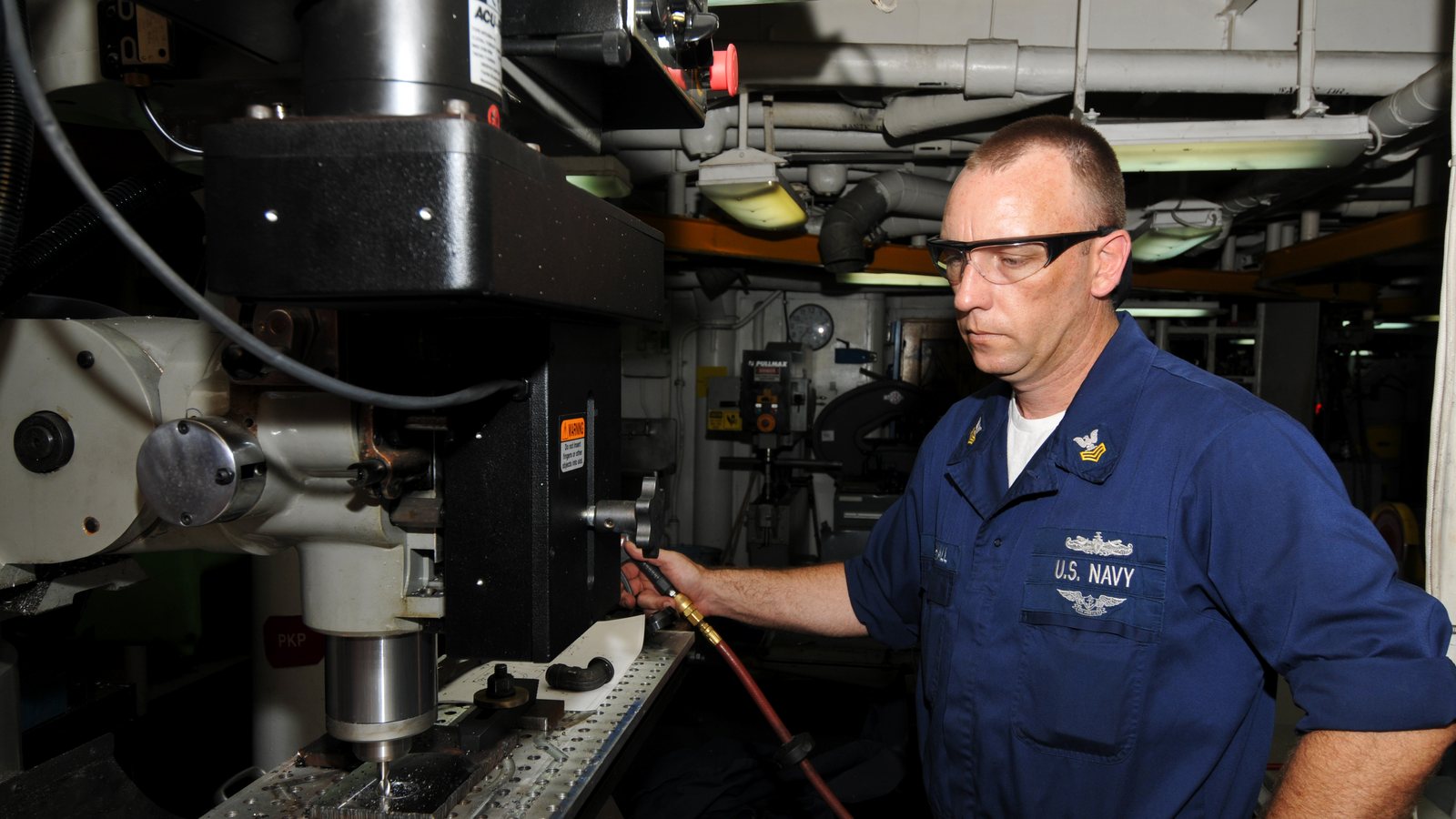
The investigation was opened on 2 September 2025 by the Commerce Department's Bureau of Industry and Security (BIS). Its scope, according to the notice published in the Federal Register, runs from industrial robots to computer numerical control machining centres, via presses, welding machines, industrial ovens and laser or water-jet cutting tools. The public had until 17 October 2025 to submit comments; the docket shows 277.
A threat described in military terms
The proclamation, which takes up the Commerce Secretary's findings, presents this equipment as "critical to virtually all modern manufacturing processes, including for defense, commercial, and dual-use purposes". According to the text, it is used to produce aircraft, tanks, ships, weapons and munitions, and to automate the building of missiles. Advanced robots, humanoid and quadruped robots or autonomous ground vehicles, are cited for reconnaissance, casualty extraction and mine clearing.
« Indeed, the defense industrial base's ability to surge production, including during wartime or armed conflict, relies on industrial robotics and machinery. »
The text adds that the United States relies on imports for "most types" of robotics and industrial machinery, that the value of these imports has increased over the last decade, and that the country "produces less robotics and industrial equipment than it consumes". It gives no import figures and no breakdown by country.
Drawing the 232 weapon without firing
The operative part is brief. The president "determine[s] that it is necessary and appropriate to enter into negotiations with trading partners". The Commerce Secretary and the US Trade Representative (USTR) are to negotiate "with any foreign trading partner" they deem appropriate, and update him "within 180 days". By way of comparison, the White House fact sheet lists the products already subject to Section 232 tariffs: steel, aluminium, copper, automobiles, trucks, timber and lumber, semiconductors, pharmaceuticals, polysilicon and drones.
The text keeps the threat in reserve: under the operative clauses, the president "may consider alternative remedies in the future", tariffs, duties, quotas, fees, or a programme to incentivise investment in the United States. The law goes further: if no agreement is reached within 180 days, or if the agreement is ineffective, the president "shall take" such other actions as he deems necessary, or publish in the Federal Register his decision not to act and his reasons.
This choice is not isolated. On 9 July 2026, Proclamation 11040 on commercial aircraft and jet engines had already opted for negotiations and a progress update within 180 days; the Commerce Secretary had recommended, according to the text, "that no immediate tariffs be imposed". On 22 October, Proclamation 11074 on wind turbines followed the same pattern. For robotics, the proclamation does not say what the Secretary recommended: only "various actions".
Nameless "foreign entities"
The most sensitive paragraph is two sentences long. According to the Commerce Secretary, robotics and machinery "from certain foreign entities pose unique security and safety risks", because they process and store sensitive data; when sourced from foreign entities, they "can pose significant cybersecurity vulnerabilities". No country and no company is named.
Reuters notes that in July the Federal Communications Commission (FCC) barred imports of new models of Chinese robots and power inverters, while still allowing existing models of humanoid and quadruped robots to be imported. The proclamation itself makes no such link.
A report no one has read
The threat finding rests on the Commerce Secretary's report, transmitted to the president "within the past 90 days", according to the proclamation. The report is not attached to the text. On 29 October, the BIS page on Section 232 investigations still listed the investigation as "Initiated September 2, 2025", with no report attached, whereas it does provide reports for older investigations, such as steel and aluminium (2018) or automobiles (2019). Our search of the Federal Register the same day found no publication of the report.
Yet the law provides that any portion of the report that does not contain classified or proprietary information "shall be published in the Federal Register", without setting a deadline in the text. The notice opening the investigation, for its part, stated that business confidential information submitted by companies would be protected.
$7.1 trillion: what the figure really measures
The most widely quoted figure is also the easiest to misread. The proclamation says that robotics and industrial machinery "support" approximately $7.1 trillion in shipments of manufactured goods in 2024, and "the production of approximately $86 billion worth of equipment". The first figure measures the manufacturing that uses these machines, not the size of the robotics and machine-tool sector. The second is equipment production; the proclamation gives neither the value of imports nor that of total consumption.
On 29 October, the CTOL Digital Solutions website linked these two amounts to the goods already subject to Section 232 tariffs listed in the White House fact sheet; in the proclamation, they refer to robotics and industrial machinery.
What holds up
The procedure laid down by law was followed: public notice, comments, report, presidential finding. Negotiation is itself a remedy provided for by Section 232, which then frames presidential action with the 180-day deadline. By forgoing an immediate tariff, the decision "spares US manufacturers, which rely on foreign imports for most types of robotics and industrial machinery, from immediate new tariffs", Reuters writes, while leaving the threat open if talks fall short. And KPMG notes that the text "does not immediately impose new tariffs" while leaving the door open.
Counter-reading
What the official story doesn't tell you
- The evidence: the threat finding relies on a report not published to date. The proclamation contains no import figures and no market shares by country.
- The targets: "certain foreign entities" pose "unique" risks, according to the text. Which ones? It does not say.
- The allies: the negotiations target "any foreign trading partner" deemed appropriate. The text does not say whether Europe, Japan or South Korea are primarily concerned.
- The recommendation: for aircraft, the Commerce Secretary recommended no tariffs. For robotics, the proclamation only mentions "various actions".
- The deadline: 26 April 2027 is the deadline for a progress update, not for a decision. Tariffs remain possible before and after.
A "threat to national security", says the proclamation. No tariffs, say its operative clauses. In between: an unpublished report, nameless "foreign entities" and a deadline of 26 April 2027 at the latest. One question remains: on what data does Washington base the threat?
Fact-check
The fact-check, point by point
Claims made in the 28 October proclamation and in its media coverage, checked against the official text, the law and the public documents of the investigation. Click on a point to read the analysis.
What the official version says
On 28 October 2026, Donald Trump signed a proclamation under Section 232 of the Trade Expansion Act of 1962. Adopting the Commerce Secretary's findings, it finds that imports of robotics, industrial machinery and their components threaten to impair US national security, citing defence production in particular.
The text imposes no tariffs: it directs the Commerce Secretary and the US Trade Representative to negotiate with trading partners and report back within 180 days. The investigation report has not been published to date.
Claims checked
Needs context Robotics and industrial machinery are being imported "in such quantities and under such circumstances as to threaten to impair the national security" (proclamation, 28/10/2026)
This is the legal finding that triggers Section 232, made by the Commerce Secretary and adopted by the president. It cannot be checked from outside: the report behind it has not been published to date, and the proclamation gives no import figures and no breakdown by country.
The law provides for the unclassified, non-proprietary portion of the report to be published in the Federal Register.[1][6][8]
Accurate No immediate tariffs, but negotiations and a progress update within 180 days (White House, Reuters)
The operative clauses order negotiations and a progress update "within 180 days of the date of this proclamation", i.e. by 26 April 2027 at the latest by our count. It is a deadline for a report, not for a decision.
Tariffs, quotas and fees are cited as future options; the law requires the president to act, or to publicly explain his inaction, if no agreement is reached within that period.[1][3][4][8]
Needs context Robotics and industrial machinery "support" approximately $7.1 trillion in shipments of manufactured goods and $86 billion of equipment production in 2024 (proclamation)
Both figures do appear in the proclamation, without a detailed source. The first measures shipments by the manufacturing industry these machines serve, not the size of the sector; the second, equipment production.
On 29 October, the CTOL Digital Solutions website linked these amounts to the goods already subject to Section 232 tariffs; the proclamation links them to robotics and industrial machinery.[1][11]
Needs context Robotics and machinery "from certain foreign entities pose unique security and safety risks" (proclamation)
Needs context The United States relies on foreign imports for "most types" of robotics and industrial machinery (proclamation)
The claim comes with no figures: no dependency rate, no import value, no supplier countries. The text also acknowledges "a recent surge in investments" in US manufacturing facilities.[1]
Sourced counter-arguments
The procedure laid down by law was followed: Federal Register notice, public consultation (277 comments in the docket), Secretary's report, presidential finding.[5][7][8]
Negotiating an agreement is a remedy expressly provided for by Section 232, framed by a 180-day deadline.[8]
Forgoing an immediate tariff "spares US manufacturers", which rely on imports for most types of machinery, from new duties, according to Reuters.[3]
The threat of tariffs remains explicitly on the table, which may carry weight in the negotiations.[1][4]
Part of the report may legitimately remain confidential: the law excludes classified or proprietary information from publication, and the investigation notice promised to protect companies' business data.[5][8]
Questions that remain open
- What data is the threat finding based on?
- Who are the "certain foreign entities"?
- When will the Commerce report be published?
- What "various actions" did the Secretary recommend?
- Which countries will Washington negotiate with?
In short
Established: a 28 October proclamation that declares imports of robotics and industrial machinery a threat to national security, with no tariffs, negotiations and a progress update by 26 April 2027 at the latest. Resting on the administration's word alone: the finding itself, in the absence of a published report. Missing: import data, the identity of the "foreign entities" targeted and the list of countries invited to negotiate.
Sources
- Adjusting Imports of Robotics, Industrial Machinery, and Their Parts and Components into the United States (presidential proclamation, 28/10/2026) — The White House · accessed 29 October 2026
- Fact Sheet: President Donald J. Trump Adjusts Imports of Robotics, Industrial Machinery, and Their Parts and Components into the United States (28/10/2026) — The White House · accessed 29 October 2026
- Trump says imported robotics pose national security risks but does not impose tariffs (David Shepardson, Reuters, 28/10/2026) — Investing.com (Reuters report) · accessed 29 October 2026
- TaxNewsFlash: Section 232 proclamation on robotics and industrial machinery (28/10/2026) — KPMG (United States) · accessed 29 October 2026
- Notice of Request for Public Comments on Section 232 National Security Investigation of Imports of Robotics and Industrial Machinery (doc. 2025-18749, 90 FR 46382, 26/09/2025) — Federal Register (Bureau of Industry and Security, Department of Commerce) · accessed 29 October 2026
- Section 232 Investigations (official page) — Bureau of Industry and Security (Department of Commerce) · accessed 29 October 2026
- Docket BIS-2025-0257 (public comments) — Regulations.gov · accessed 29 October 2026
- 19 U.S. Code § 1862 – Safeguarding national security (text of Section 232) — Legal Information Institute (Cornell Law School) · accessed 29 October 2026
- Proclamation 11040: Adjusting Imports of Commercial Aircraft, Jet Engines, and Aircraft and Engine Parts Into the United States (signed 09/07/2026, 91 FR 43507) — Federal Register · accessed 29 October 2026
- Proclamation 11074: Adjusting Imports of Wind Turbines and Their Parts and Components Into the United States (signed 22/10/2026, 91 FR 68001) — Federal Register · accessed 29 October 2026
- Trump's robotics order sets an April 2027 update deadline, with tariffs still possible (29/10/2026) — CTOL Digital Solutions · accessed 29 October 2026
AI-assisted content: this article was written with the help of artificial intelligence from public sources, then reviewed and approved by a human editor before publication. Spotted an error, want to respond? Exercise your right of reply · our method.