Sovereignty · Semiconductors · Defence
"American everything"? The BlueChip laptop, more than 90% US or allied according to Anduril, and no orders before 2027
"American everything": on X, Palmer Luckey presents BlueChip as "the first American computer in decades". The Anduril and Qualcomm press release says something else: more than 90% of the component cost of the prototypes, US and allied suppliers combined, and orders in 2027. What the numbers say, and what they don't.
Translated from the French original. In case of discrepancy, the French version prevails.
On Tuesday 27 October, Anduril and Qualcomm unveiled BlueChip, a line of computers meant to "rebuild American computer manufacturing". The first product announced is a rugged laptop, "designed and assembled in the United States", for government, defence and emergency services.
The same day, on X, Anduril's founder Palmer Luckey summed up the ambition in a string of repeated words: glass, metal, silicon, batteries, workers… "American everything". The post had passed 900,000 views by 28 October, according to the platform's counter.
« American glass. American metal. American silicon. American batteries. American workers. American everything. »
90%, but of what?
The press release is more cautious than the slogan. According to it, components sourced from "U.S. and allied-country suppliers" account for "more than 90%" of the prototypes' component procurement cost. That one sentence carries three qualifiers: it is a cost, not a parts count; it covers prototypes, not a production model; and it is a combined US-plus-allies total, with no breakdown.
Speaking to the press, Mr Luckey described a bill of materials that is "about 90% U.S. and allied" and a "roadmap" to 100% domestic, TechCrunch reports. Neither the strictly American share nor the nature of the remaining 10% or so has been published.
« As of right now, the laptop's bill of materials is about 90% U.S. and allied, and we have a technical roadmap to get to 100% domestic over time. »
American silicon, Taiwanese foundry
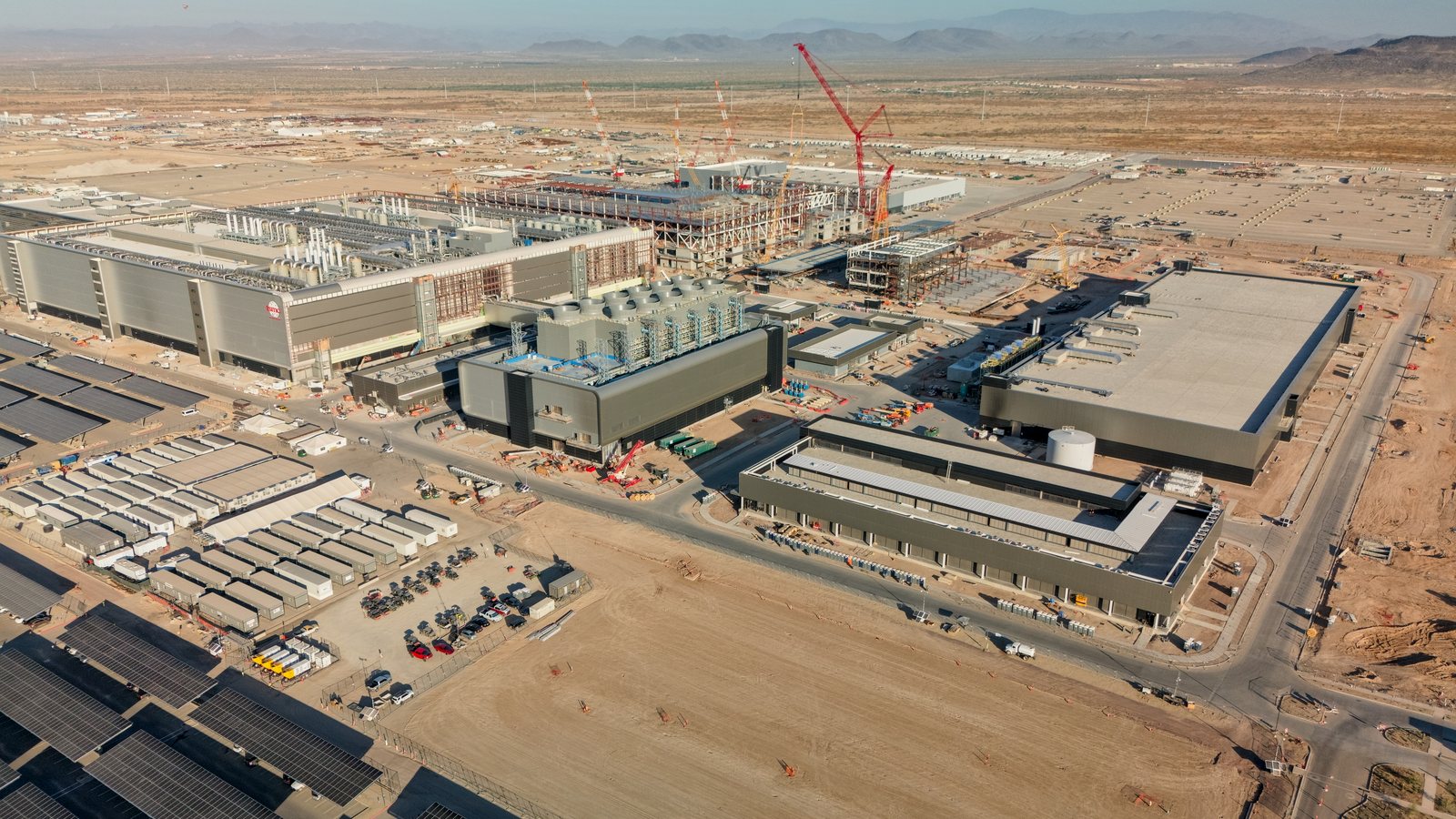
The heart of the machine, a Qualcomm Snapdragon X chip, will be made by TSMC, the Taiwanese foundry, at its Arizona facilities, Qualcomm CEO Cristiano Amon said, according to Reuters and TechCrunch. The press release itself does not name TSMC. American soil, then, but a subsidiary of a Taiwanese group, which Washington has awarded up to $6.6 billion in direct funding under the CHIPS Act.
The display is one of the components that are only made in China today, according to Mr Luckey, who says he has found a US supplier for the cover glass. For the rest, the press release describes engineering work: an enclosure designed for US machining, power management suited to existing American battery technology. Anduril says it is "working to expand" domestic component production ahead of 2027.
No price, no spec sheet, see you in 2027
Anduril says it has "functional prototypes" and plans to begin taking orders in 2027. According to Mr Luckey, quoted by TechCrunch, the company has not finished contracting with all its suppliers, and the price would be about 20% higher than a typical high-end PC. On the product page, compute, memory, weight and display are redacted.
The target customer is not the general public: Mr Luckey acknowledges that an average consumer would be better off buying a cheaper Dell. The point, TechCrunch writes, is to offer US government agencies a product that complies with regulations requiring them to buy US-made computers. TechCrunch puts the rugged computer market at about $5 billion, without citing a source; research firm IMARC estimates the global market for rugged notebooks alone at $3.4 billion in 2025.
What holds up
To their credit, the diagnosis is not in dispute, and the release does not hide how far there is to go: it acknowledges that circuit boards, displays and batteries are "still largely produced overseas" and claims a "phased approach", with a fully domestic supply chain as a "long-term goal". According to the release, circuit board assembly is planned at Arsenal-1, Anduril's plant in Ohio, where the company started production of its Fury drone in March 2026, according to the Columbus Region economic development agency.
Separately, according to a Reuters report the same day, Anduril, which has reported $2.2 billion in revenue for 2025, is said to be in talks to raise funding at a valuation of about $100 billion.
Counter-reading
What the official story doesn't tell you
- The American share: the figure lumps together "U.S. and allied". Which allies, for what share? Nothing is broken down.
- The remaining 10%: which components, from which countries? Mr Luckey himself cites the display, made only in China according to him.
- The production model: the 90% figure covers the prototypes; nothing is said about the version sold from 2027.
- The promised audit: TechCrunch describes a supply chain customers can "track and audit". The supplier list has not been published.
- The chip: it is to be made in Arizona, according to Qualcomm, but where will it be packaged? Neither the release nor Mr Amon's remarks as reported by Reuters and TechCrunch say.
"American everything", says the slogan. "More than 90%" of the prototypes' cost, US and allies combined, says the press release. In between: a display that only China makes, according to Mr Luckey himself, a Taiwanese foundry and a date in 2027. One question remains: when will the supplier list be published?
Fact-check
The fact-check, point by point
Claims made since 27 October, checked against the Anduril and Qualcomm press release, statements by Palmer Luckey and Cristiano Amon reported by TechCrunch and Reuters, and public data. Click on a point to read the analysis.
What the official version says
On 27 October 2026, Anduril and Qualcomm unveiled BlueChip, a line of computers meant to "rebuild American computer manufacturing", starting with a rugged laptop designed and assembled in the United States for government, defence and first responders. According to the release, more than 90% of the prototypes' component procurement cost comes from US and allied suppliers; orders are due to open in 2027.
On X, Anduril founder Palmer Luckey summed up the project as "American everything". According to Reuters and TechCrunch, the Snapdragon X chip will be made by TSMC at its Arizona facilities.
Claims checked
Needs context "American glass. American metal. American silicon. American batteries. American workers. American everything." (Palmer Luckey, X, 27/10/2026)
This verdict concerns the slogan, taken in the present tense, not its author. The release published the same day by Anduril and Qualcomm describes a different reality: more than 90% of the prototypes' component cost coming from "U.S. and allied" suppliers, a "phased approach" meant to progress "toward eliminating reliance on foreign suppliers", and a fully domestic supply chain presented as a "long-term goal".
Mr Luckey himself, quoted by TechCrunch, speaks of a bill of materials that is "about 90% U.S. and allied" and lists the display among components that, according to him, are only made in China. The chip, for its part, is indeed to be made on US soil, by TSMC in Arizona, according to Qualcomm's CEO.[1][3][5]
Needs context More than 90% of component cost comes from US and allied suppliers (press release, 27/10/2026)
The figure cannot be checked from outside: no bill of materials has been published. It refers to procurement cost, not the number of components; to prototypes, not the production model; and it combines the US and allies with no breakdown.
TechCrunch rephrases it as "90% of its components" for the first generation: a different wording from the release.[1][3]
Needs context The Snapdragon X chip will be made in the United States (Cristiano Amon, according to Reuters and TechCrunch)
Accurate as to the announced location: TSMC Arizona, whose first fab is slated for 4 and 5 nm processes, according to the Department of Commerce project page. But the foundry is a subsidiary of a Taiwanese group, and where packaging takes place has not been specified.
This is a stated intention, in the future tense, not observed production.[2][3][6]
Accurate Orders will open in 2027 (Anduril)
Sourced counter-arguments
The press release does not claim the product is already fully American: it takes a "phased approach" and sets a fully domestic supply chain as a "long-term goal".[1]
The dependency diagnosis is acknowledged in the text itself: circuit boards, displays and batteries are "still largely produced overseas".[1]
Making the chip in Arizona does bring an industrial step onto US soil, in a plant backed by federal public funding.[6]
Arsenal-1 is an operating plant: according to the Columbus Region agency, Anduril started production of its Fury drone there in March 2026.[7]
Mr Luckey is not targeting the general public and admits a premium of about 20%; according to TechCrunch, the offer is aimed at government agencies bound by rules requiring them to buy US-made equipment.[3]
Questions that remain open
- What share of the cost is strictly American?
- What are the remaining 10%, and where do they come from?
- Will the 90% figure hold for the production model?
- Where will the chip be packaged?
- Will the supplier list be published?
In short
Established: a rugged laptop announced as designed and assembled in the United States, with a chip TSMC is to make in Arizona according to Qualcomm, and orders planned for 2027. Resting on Anduril's word alone: the 90% threshold for the prototypes' component cost, US and allies combined. Missing: the strictly American share, the supplier list, the price and the specifications.
Sources
- Anduril and Qualcomm Unveil BlueChip to Rebuild American Computer Manufacturing (press release, 27/10/2026) — Anduril Industries · accessed 28 October 2026
- Anduril, Qualcomm partner on new line of US-made laptops (Stephen Nellis, Reuters, 27/10/2026) — Investing.com (Reuters report) · accessed 28 October 2026
- Anduril, Qualcomm launch BlueChip, a new kind of US-made laptop (Julie Bort, 27/10/2026) — TechCrunch · accessed 28 October 2026
- BlueChip (product page) — Anduril Industries · accessed 28 October 2026
- Palmer Luckey's post on X, 27/10/2026 — X, Palmer Luckey's account · accessed 28 October 2026
- TSMC Arizona (Phoenix, AZ) – CHIPS project page — National Institute of Standards and Technology (US Department of Commerce) · accessed 28 October 2026
- First Ohio-built Fury rolls off Anduril's Arsenal-1 production line (27/07/2026) — Columbus Region (economic development agency) · accessed 28 October 2026
- Rugged Notebooks Market (market study) — IMARC Group · accessed 28 October 2026
AI-assisted content: this article was written with the help of artificial intelligence from public sources, then reviewed and approved by a human editor before publication. Spotted an error, want to respond? Exercise your right of reply · our method.