Space · Sovereignty · Defence
'Sovereign' satcom for Ukraine: a letter of intent, not an order
In the middle of the Starshield crisis, Kyiv signed a letter of intent on 22 October with Finland's ICEYE and Nokia to "explore" sovereign satellite communications. No amount, no public funding and no Ukraine-specific timeline have been published, and the first satellite is not expected before 2028. ICEYE says so itself: this is not an order.
Translated from the French original. In case of discrepancy, the French version prevails.
Thursday 22 October, Kyiv. During a visit by Finnish Prime Minister Petteri Orpo, Ukraine's Ministry of Defence signs a letter of intent with ICEYE and Nokia. Its purpose, according to the press release: "to explore cooperation in space", particularly "sovereign" satellite communications.
The timing is no accident. Kyiv says its access to Starshield, the military version of Starlink, has been throttled since mid-October. According to Reuters, citing anonymous sources, the order to limit it came from inside the White House; a senior US official says "no such request was ever made by the president". Elon Musk wrote on X that such limits are decided by the US military and, ultimately, the president.
On 22 October, Donald Trump said access had been restored. A Ukrainian official told the Kyiv Independent otherwise; Volodymyr Zelensky told ABC News that speeds remained limited, Breaking Defense reports.
« Modern warfare has proven that reliable communications are a matter of national security. We must all rely on capabilities that we can control. »
What the text actually says
The press release is cautious. The signatories commit to "explore". Mikko Hautala, chairman of Nokia Defense, says they "will explore how" sovereign satcom can strengthen Ukraine's resilience. There is no amount, no number of satellites, no in-service date for Ukraine and no public funding.
ICEYE confirms it. "The LOI with the Ministry of Defence of Ukraine is an expression of intent and does not imply an ordering of any system for Ukraine," a spokesperson told Breaking Defense.
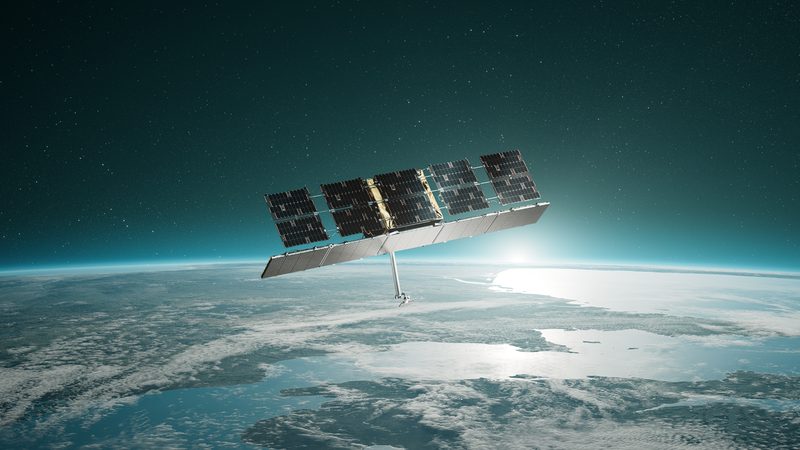
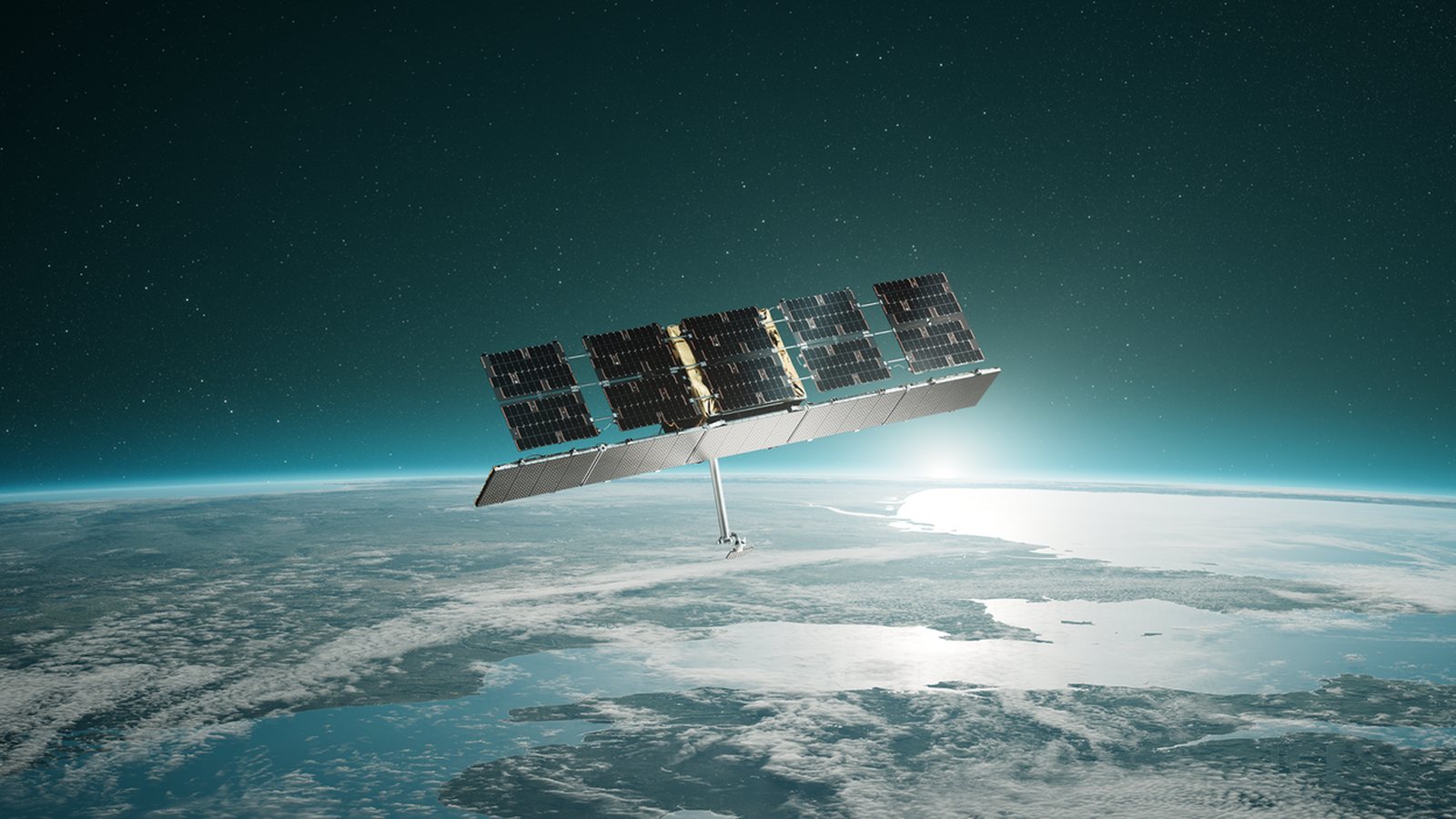
The system itself does not exist yet. The ICEYE–Nokia partnership was announced on 1 October; the first communications satellites are "expected" in 2028. On its dedicated page, ICEYE writes: "This is a concept, developed in dialogue with the nations who will operate it."
Headlines in more of a hurry than the text
In the press, intent has sometimes run ahead. "Kyiv eyes purchase", Breaking Defense headlined, while noting that the letter "falls short of an actual order". Aviation Week wrote that the firms "commit to providing" satcom; the Kyiv Independent described a "plan" to help Ukraine build its own system.
What must be acknowledged
ICEYE is no slideware start-up. It operates around 80 radar satellites, employs more than 1,500 people and passed €250 million in revenue in 2025, according to Yle; the Finnish, Polish and Dutch armed forces are among its customers. Its CEO, Rafal Modrzewski, says ICEYE delivered Poland its own radar satellite system "in under a year".
A letter of intent is also a legitimate political signal: signed during a head of government's visit, it shows Kyiv seeking to reduce its dependence on a single provider. And the text promises no more than it says: it "explores".
Then there is scale. Starlink has more than 10,000 satellites, Yle notes. Europe has its own project: according to the Commission, IRIS² will have 348 satellites, with first launches brought forward to 2029; ESA expects progressive initial services in 2030 and full capability by 2032. ICEYE says its system is designed to work "alongside" IRIS². The Ukrainian letter does not mention it.
Counter-reading
What the official story doesn't tell you
- No order: ICEYE says so, not its critics.
- No satellite before 2028 at best, on the companies' own timeline; no Ukraine-specific schedule.
- No price: no amount and no named funder, in Kyiv, Helsinki or Brussels.
- "Sovereign" is yet to be defined: who will hold the encryption keys? What share of components falls under US export rules (ITAR)? The press releases do not say.
Kyiv is right to seek links it controls. But until the first announced launch, in 2028, this letter does not deliver a single megabit. A letter of intent, not an order: a first step, not a way out of the crisis.
Fact-check
The fact-check, point by point
The claims circulating since 22 October, checked against the ICEYE and Nokia press releases, statements gathered by the press and official IRIS² documents. Click on a point to read the analysis.
What the official version says
On 1 October 2026, ICEYE, the Finnish radar satellite specialist, and Nokia announced a partnership to develop "secure and sovereign" low Earth orbit satellite communications systems for governments; the first satellites are expected in 2028.
On 22 October, during Finnish Prime Minister Petteri Orpo's visit to Kyiv, the two companies signed a letter of intent with Ukraine's Ministry of Defence "to explore cooperation in space". President Volodymyr Zelensky called it "an important step". On 23 October, an ICEYE spokesperson told Breaking Defense that it "does not imply an ordering of any system". No amount has been published.
Claims checked
False Ukraine has ordered a sovereign satellite system from ICEYE and Nokia (a reading suggested by some headlines)
An ICEYE spokesperson told Breaking Defense the letter is "an expression of intent and does not imply an ordering of any system for Ukraine". The joint release speaks of exploring cooperation.
Breaking Defense, whose headline says Kyiv "eyes purchase", itself notes that the letter "falls short of an actual order".[1][2]
Needs context Kyiv now has a European alternative to Starshield
Not in the short term. The first ICEYE–Nokia telecom satellites are "expected" in 2028, and ICEYE presents the system as "a concept". No number of satellites and no in-service date for Ukraine has been published.
The companies also describe it as designed to complement military and commercial networks "rather than replace them".[1][3][4]
Needs context The system will give Ukraine ownership and control of the satellites, ground segment and terminals (joint press release)
This is the companies' design promise, with three models: a national constellation, a coalition constellation or a hosted sovereign service. Which would apply to Ukraine is not stated.
The releases specify neither how encryption keys would be managed nor any share of components subject to foreign export rules.[1][4]
Unsubstantiated The ICEYE–Nokia project competes with IRIS², the European Union's constellation
ICEYE writes that its system is designed to work "alongside existing governmental satellite communications, such as IRIS²". According to the Commission, IRIS² targets 348 satellites and first launches in 2029; ESA expects full capability by 2032.
The Ukrainian letter does not mention IRIS². How the two fit together remains an open question.[4][8][9]
Needs context Ukraine's Starshield access has been restored (Donald Trump, 22/10/2026, paraphrased)
Sourced counter-arguments
ICEYE has real industrial capacity: around 80 radar satellites in orbit, more than 1,500 staff and military customers in Finland, Poland and the Netherlands, according to Yle.[7]
Its CEO says it delivered Poland its own radar satellite system in under a year.[3]
A letter of intent is a legitimate political signal, signed in the presence of an allied head of government.[1][5]
The release does not oversell: it speaks of "exploring" cooperation, and ICEYE itself ruled out any idea of an order.[1][2]
Questions that remain open
- Who will fund the system, and for how much?
- How many satellites for Ukraine, and when?
- Who will hold the encryption keys?
- What share of components falls under ITAR?
- What link with IRIS² and GOVSATCOM?
In short
The letter of intent signed on 22 October is real, and so is Ukraine's need for communications it controls. What is established: an intent to "explore", an industrial partnership announced on 1 October, a first launch expected in 2028. What is not: a contract, a price, a funder, a Ukrainian timeline. What is missing above all: answers on encryption, US components and the link with IRIS².
Sources
- ICEYE and Nokia partner with the Ministry of Defence of Ukraine to develop sovereign satcom capability (joint press release, 22/10/2026) — Nokia (joint ICEYE–Nokia press release) · accessed 26 October 2026
- Kyiv eyes purchase of planned ICEYE, Nokia 'sovereign' communication sats (Theresa Hitchens, 23/10/2026) — Breaking Defense · accessed 26 October 2026
- ICEYE and Nokia partner to launch secure and sovereign satellite communications for governments and defense customers (press release, 01/10/2026) — ICEYE · accessed 26 October 2026
- Sovereign satellite communications by ICEYE and Nokia (product page) — ICEYE · accessed 26 October 2026
- Amid Starlink crisis, Finnish tech giants announce plan to help Ukraine build its own sovereign satellite system (Abbey Fenbert, 23/10/2026) — The Kyiv Independent · accessed 26 October 2026
- Order to limit Starshield for Ukraine came from inside White House, sources say (Erin Banco and Gram Slattery, Reuters, 16/10/2026) — Defense News (Reuters report) · accessed 26 October 2026
- Two Finnish firms progress satellite plans for Ukraine (23/10/2026) — Yle News · accessed 26 October 2026
- The European Union is accelerating and reinforcing IRIS² (07/08/2026) — European Commission, DG Defence Industry and Space · accessed 26 October 2026
- ESA Programme Related to EU Secure Connectivity – IRIS² — European Space Agency (ESA) · accessed 26 October 2026
- Iceye, Nokia Commit To Providing Sovereign Satcom To Ukraine (Vivienne Machi, 23/10/2026) — Aviation Week · accessed 26 October 2026
AI-assisted content: this article was written with the help of artificial intelligence from public sources, then reviewed and approved by a human editor before publication. Spotted an error, want to respond? Exercise your right of reply · our method.