AI · Semiconductors · Export controls & sanctions
30 servers seized in Malaysia: AI chip transit faces scrutiny
On 15 October, Malaysian customs say they seized 30 servers fitted with advanced AI chips in Kuala Lumpur airport’s free-trade zone. Announced on 28 October, the case shows how oversight reaches transit routes — while the shipment’s origin and destination remain undisclosed.
Translated from the French original. In case of discrepancy, the French version prevails.
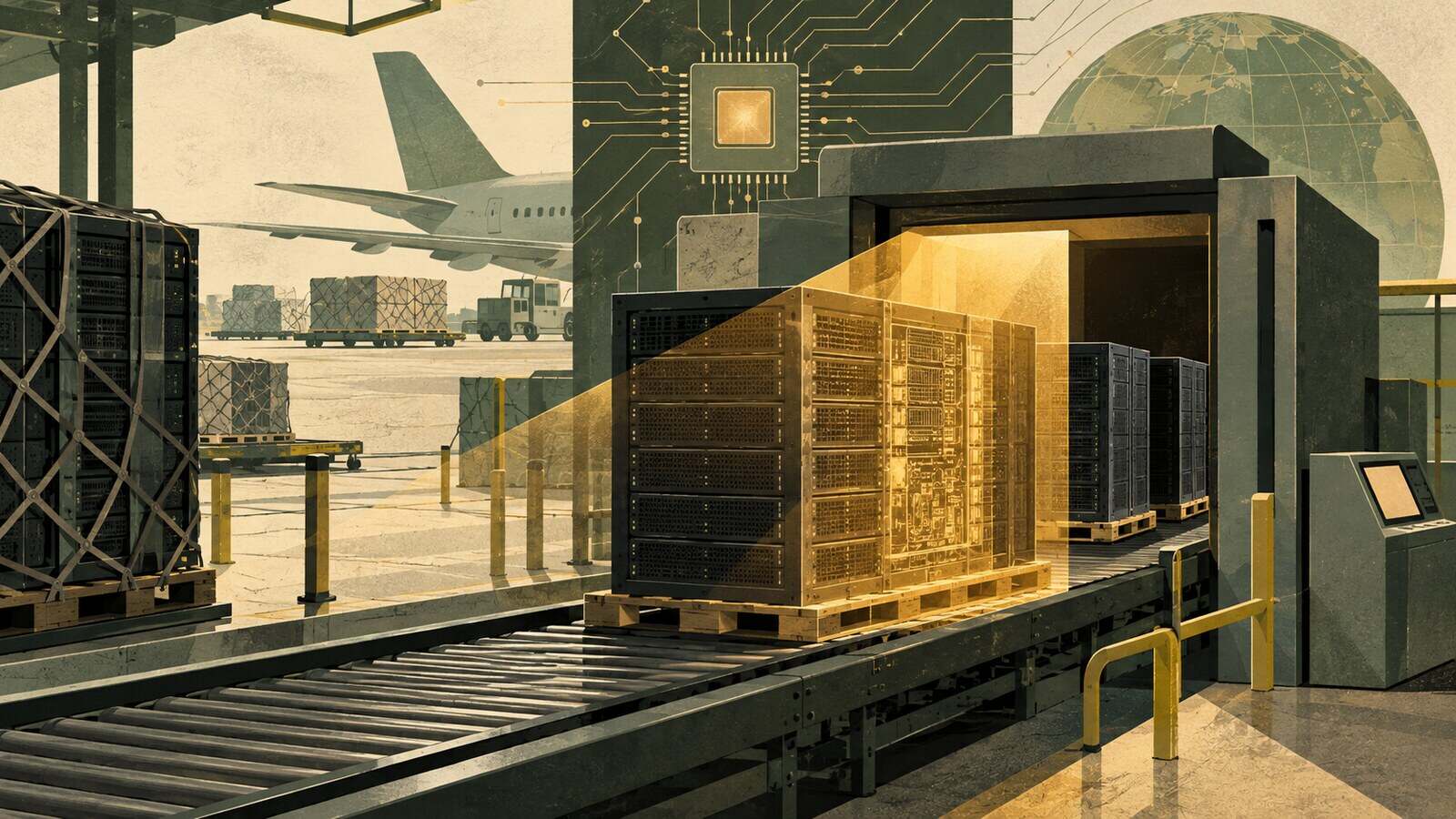
At 11:30 a.m. on 15 October, Malaysian customs officers inspected a warehouse in the free-trade zone at Kuala Lumpur International Airport. They found 30 servers containing advanced artificial-intelligence chips. Authorities valued the shipment at nearly 49.5 million ringgit. They made the case public only on 28 October. [1]
Several details remain under investigation. Airport customs director Aspalila Ag. Tuah said the servers had arrived from an unnamed Asian country under a single air waybill, declared as “electronic components”, before being re-exported to another country in the region. She said the declaration was allegedly intended to evade scrutiny. The chips’ origin, destination and brands have not been disclosed. [1][2]
Transit is covered by specific rules
The issue goes beyond this seizure. Malaysia’s Strategic Trade Controller Directive No. 1/2025, dated 14 July 2025 and revised in December, governs the export, transit and transshipment of certain advanced AI chips. It sets technical categories and parameters, and also covers computers and components that meet those criteria; it does not automatically classify every AI chip as a controlled item. [4]
For covered items, the directive requires notice to the relevant secretariat at least 30 days before an operation when a company knows, or has reasonable grounds to suspect, a connection to a restricted activity defined by law — including activity related to weapons of mass destruction. If the relevant authority allows the operation, a permit application must then be filed. MITI has separately said exports, transit and transshipment of high-performance US-origin AI chips are subject to a strategic trade permit. [4][5]
Civilian computing, defence implications
AI servers have established civilian uses: data-centre computing, model training and inference. The same computing capacity can also matter to defence research and some military systems. Malaysian officials say the seized chips could be used to develop military technology and describe them as dual-use under the applicable legal regime. That statement does not establish the shipment’s intended use or end user. [1]
The trade route is now part of the security question. Malaysia says it wants to prevent transit zones from being used to bypass restrictions on advanced chips. Reuters and the Associated Press report, citing the authorities’ briefing, that customs linked the case to a network suspected in five cases this year, with a combined value exceeding 100 million ringgit. No arrest had been announced by 28 October; a Malaysian company that facilitated the shipment had been asked to assist the investigation. [1][2][3]
What cannot yet be concluded
No public source reviewed identifies the chips, verifies their country of origin or reveals their destination. It is therefore impossible to establish whether the shipment falls under the US-origin chip rule or to compare its public specifications with the technical thresholds. Bernama, Reuters and AP reports rely on official statements; no shipping documents or investigative findings have been released so far. [1][2][3][4]
The case nevertheless illustrates a concrete change: controls on computing technology do not stop with exporters and manufacturers. Intermediaries and transit hubs also matter when national rules cover passage or transshipment. That does not mean every computing system is automatically a regulated dual-use good: classification depends on the categories, technical specifications and conditions in the applicable rules. [4][5]
Fact-check
The fact-check, point by point
The facts reported on 28 October, checked against Malaysia’s directive and independent Reuters and AP coverage.
Claims checked
Verified Customs seized 30 servers on 15 October in Kuala Lumpur airport’s free-trade zone.
Needs context The cargo was declared as electronic components and was to be re-exported to another Asian country.
Misleading Malaysia’s directive covers all equipment containing an advanced AI chip.
Sourced counter-arguments
Malaysia presents the operation as enforcement of existing rules against circumvention. Public reports do not provide the underlying evidence and are not a court judgment.[1][2][3]
The Malaysian text does not cover all AI computing equipment: technical parameters and the specified use context define the applicable obligations.[4][5]
Questions that remain open
- Which chip models and technical specifications are involved?
- What evidence links this shipment to the other cases attributed to the same network?
- Have investigators established the goods’ origin, final destination or end users?
- Which notice and permit obligations apply to this shipment given that its specifications and origin have not been disclosed?
- How does the administration distinguish the US-origin chip rule from the categories in Directive No. 1/2025?
In short
Malaysian customs describe a suspected attempt to transit servers with advanced chips. Until the models, routes and investigation findings are public, the case chiefly documents a wider issue: controls on computing capacity also depend on transit hubs, under technical and legal rules that must be assessed case by case.
Sources
- KLIA Customs Foils Attempt To Transit AI Chips With Potential Military Use — BERNAMA · accessed 29 October 2026
- AI chips worth $12.1 million seized at Malaysia airport, customs authority says — Reuters, via Investing.com · accessed 29 October 2026
- Malaysia seizes servers with advanced AI chips suspected of violating export controls — Associated Press · accessed 29 October 2026
- Directive of the Strategic Trade Controller No. 1/2025 — Revised directive — MITI, Malaisie · accessed 29 October 2026
- Export, Transshipment and Transit of High-Performance AI Chips of US Origin Now Subject to a Strategic Trade Permit — MITI, Malaisie · accessed 29 October 2026
AI-assisted content: this article was written with the help of artificial intelligence from public sources, then reviewed and approved by a human editor before publication. Spotted an error, want to respond? Exercise your right of reply · our method.