Defence · Export controls & sanctions
Europe pays, America delivers: who controls the tap on Ukraine's Patriots?
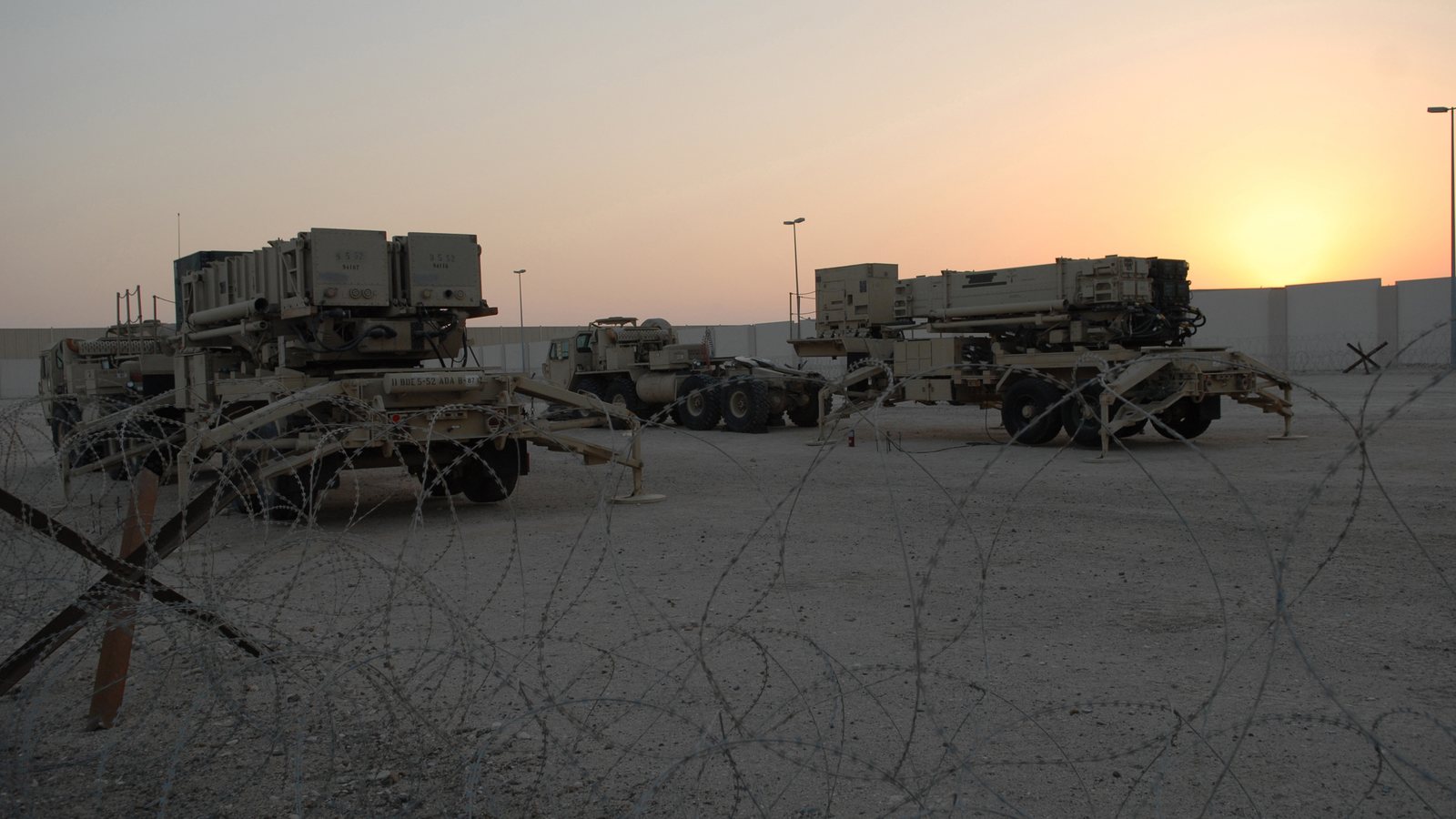
According to Volodymyr Zelensky, Kyiv has been waiting "for nearly a month" for Pete Hegseth to sign off on Patriot and NASAMS missiles. According to Reuters, the pending batch was bought by allies through NATO's PURL mechanism; made in the United States, these interceptors remain under US control. What the law says, and what remains to be established.
Translated from the French original. In case of discrepancy, the French version prevails.
On Monday 26 October, on X, Volodymyr Zelensky wrote that Ukraine had been waiting "for nearly a month" for "Mr. Hegseth" to sign off on missiles for its Patriot and NASAMS systems. He said he had instructed his team to raise the matter with Washington "once again".
The post followed a meeting with his defence and foreign ministers and the commander-in-chief. Kyiv is working "on several tracks", he wrote: the United States, Europe and other partners with stocks of PAC-2 and PAC-3 missiles. The next Ramstein-format meeting is due in November.
« In particular, we have been waiting for nearly a month for Mr. Hegseth to sign off on missiles for Patriots and NASAMS. I instructed our team to raise this with the American side once again. »
Who paid, who delivers
According to NATO, the PURL mechanism, launched in July 2025, works like this: the Supreme Allied Commander identifies Ukrainian needs that the United States can meet, Allies fund them, and NATO coordinates delivery. According to the Alliance, Allies and partners have funded more than $6 billion of US equipment this way. According to Ukraine's Ministry of Defence, by July 29 countries had contributed $6.7 billion, led by Norway, the Netherlands and Germany, and around 95% of Patriot interceptors were arriving through this channel.
Which batch is waiting, worth how much, paid for by whom? No public document says. A Ukrainian official described it to the Kyiv Independent as "significant". Reuters reported that Mr Hegseth had yet to authorise delivery of the latest package bought by allies under PURL. The Washington Post, citing a US official and three other people, refers to transfers from countries friendly to Ukraine that require his approval. The exact channel has not been made public: a retransfer by an ally of equipment bought from the United States, a drawdown from US stocks, or another contract?
Which signature, which text?
The US Arms Export Control Act (AECA, section 3) bars a country that has received weapons from the United States from passing them to a third party without "the consent of the President". That consent requires that the United States itself would transfer the item to the recipient. For commercial sales, the ITAR regulations likewise require the State Department's prior written approval before any retransfer.
Does this rule apply to this batch? Nothing allows us to say so while its channel is unknown. If it did, above certain amounts the President would first have to notify Congress of the transfer, which would have 30 days to object: the shorter 15-day period applies to recipients that are NATO members or a few designated allies, which Ukraine is not. An emergency waiver allows immediate effect. The law, however, sets no deadline for the decision itself.
Yet the law does not name the Pentagon chief. A 2013 executive order delegates these functions to the Secretary of State, and the State Department says third-party transfers go through an interagency review. US officials quoted in the press nonetheless attribute the approval to Mr Hegseth. On what basis? The Pentagon has not explained publicly.
What Washington says
On 20 October in Mumbai, Marco Rubio, to his credit, acknowledged that a batch of interceptors bought under PURL "may not have been delivered", while denying any political intent: "There's nothing being deliberately denied to Ukraine." The same day in Wisconsin, Mr Hegseth said Washington had not changed its posture "in any way", adding: "with things like interceptors, we want to make sure our guys have the most possible as well".
The stockpile argument carries weight: interceptors are scarce, and Lockheed Martin agreed in January to more than triple PAC-3 MSE production, Military Times notes. According to the officials quoted by The Washington Post, Mr Hegseth has not rejected the transfers and continues to approve other assistance. A delay is not a refusal.
The backdrop remains tense. Reuters, citing unnamed sources, reported that Washington had threatened to stop PURL to press Kyiv to halt its strikes on Russian refineries; no official confirmation has been published. No public evidence links that threat to the missile delay.
Counter-reading
What the official story doesn't tell you
- Which text: the law refers to the President, who delegated to the Secretary of State; the ITAR, to the State Department. No public document explains why the decision awaited would be the Defence Secretary's.
- Which batch: number of missiles, value, who paid; nothing has been published.
- Which channel, which timeline: a retransfer by an ally, or a drawdown from US stocks? The applicable rules depend on the channel, including any congressional review. The law sets no deadline for a decision.
- Which criterion: "our guys" first, but based on what assessment of US stocks? The Pentagon has not detailed it.
Europe pays, America delivers: the principle of US control over transfers is not in question. What is missing is the channel, the text, the batch and the timeline. Until they are known, only one question matters: who has to sign, and when?
Fact-check
The fact-check, point by point
Claims circulating since 26 October, checked against Volodymyr Zelensky's post, statements by Marco Rubio and Pete Hegseth, the text of US law and press reports. Click on a point to read the analysis.
What the official version says
On 26 October 2026, Volodymyr Zelensky wrote on X that Ukraine had been waiting "for nearly a month" for US Defence Secretary Pete Hegseth to sign off on missiles for its Patriot and NASAMS systems. According to Reuters, the pending batch was bought by allies through PURL, a NATO mechanism launched in July 2025 that buys US equipment for Ukraine.
On 20 October, Marco Rubio had acknowledged that a batch bought under PURL "may not have been delivered", while denying any political intent. Pete Hegseth had said the US posture had not changed, while wanting US forces to have "the most possible" interceptors.
Claims checked
Needs context Ukraine has been waiting nearly a month for Pete Hegseth's signature on Patriot and NASAMS missiles (Volodymyr Zelensky, 26/10/2026)
A delay is corroborated: Marco Rubio acknowledged on 20 October that a batch bought under PURL "may not have been delivered", and US officials quoted by The Washington Post say Mr Hegseth has not completed the approval steps.
The exact length of the wait and the content of the batch cannot be independently verified.[1][5][6][7]
Unsubstantiated US law requires the Defence Secretary's signature for these transfers
Section 3 of the AECA gives consent to third-party transfers to the President, who delegated it to the Secretary of State in a 2013 executive order. The State Department describes an interagency review.
US officials quoted in the press attribute the approval to Mr Hegseth. The Pentagon's role may stem from unpublished procedures; no public document specifies it.[5][9][10][11]
Unsubstantiated Washington has refused to deliver these missiles to Ukraine
Unsubstantiated The delay is linked to Ukrainian strikes on Russian refineries
Needs context The United States delivers only 12 Patriot interceptors a month to Ukraine (Volodymyr Zelensky, quoted by the Kyiv Independent)
The figure is attributed to the Ukrainian president. Washington has neither confirmed nor denied it publicly, and we have not been able to verify it.[4]
Sourced counter-arguments
Patriot interceptors are scarce: the Pentagon says it wants its own forces to have "the most possible", and PAC-3 MSE production is due to more than triple under the January agreement.[8][14]
A delay is not a refusal: according to US officials quoted by The Washington Post, Mr Hegseth has not rejected the transfers and continues to approve other assistance.[5][6]
To his credit, Marco Rubio publicly acknowledges that a batch is late, while denying any political intent.[7]
Control over third-party transfers is a long-standing, general rule of US law, not a measure specific to Ukraine.[9][11]
Questions that remain open
- Which text requires the Defence Secretary's signature?
- How many missiles are waiting, worth how much?
- Which countries paid for them?
- Through which channel are these missiles to be delivered, and is notification to Congress required?
- When is a decision expected?
In short
Established: Kyiv says it has been waiting nearly a month for a signature, Washington acknowledges that a batch "may not have been delivered", and US law makes the transfer to a third party of weapons supplied by the United States subject to presidential consent. Not established: a refusal, a link with the refinery strikes, the text that would make Mr Hegseth the signatory. Missing: the transfer channel, the batch, its value, who paid and a timeline.
Sources
- Volodymyr Zelensky's post on X, 26/10/2026 — X, official account of the Ukrainian president · accessed 27 October 2026
- Ukraine has waited nearly a month for US to sign off on Patriot missiles, Zelenskiy says (Yuliia Dysa, Reuters, 26/10/2026) — WTVB (Reuters report) · accessed 27 October 2026
- Ukraine awaits Hegseth's signature for nearly a month on Patriot and NASAMS missiles – Zelenskyy (26/10/2026) — Interfax-Ukraine · accessed 27 October 2026
- US holding up air defense missiles for Ukraine for nearly a month, Zelensky says (Tim Zadorozhnyy, 26/10/2026) — The Kyiv Independent · accessed 27 October 2026
- Amid deteriorating relations, Washington holds up Patriots for Kyiv (19/10/2026, subscription) — The Washington Post · accessed 27 October 2026
- Trump administration delays approval of Patriot missiles for Ukraine: Report (Diyar Güldoğan, 20/10/2026) — Anadolu Agency · accessed 27 October 2026
- Rubio says Ukraine interceptors may not have been delivered, but not for political reasons (Reuters, 20/10/2026) — The Straits Times (Reuters report) · accessed 27 October 2026
- Secretary of War Pete Hegseth Speaks to the Press During an Arsenal of Freedom Tour Stop in Eau Claire, Wisconsin (transcript, 20/10/2026) — U.S. Department of War · accessed 27 October 2026
- 22 U.S. Code § 2753 – Eligibility for defense services or defense articles (Arms Export Control Act, section 3) — Legal Information Institute, Cornell Law School · accessed 27 October 2026
- Executive Order 13637 – Administration of Reformed Export Controls (08/03/2013) — Federal Register · accessed 27 October 2026
- Third Party Transfer Process and Documentation — US Department of State · accessed 27 October 2026
- Relations with Ukraine (section "Prioritised Ukraine Requirements List") — NATO · accessed 27 October 2026
- A year of PURL: nearly $7 billion for deliveries of critical weapons to Ukraine (23/07/2026) — Ministry of Defence of Ukraine · accessed 27 October 2026
- Pentagon, BAE sign deal for up to 25,000 precision-guided munition kits a year (Michael Scanlon, 19/10/2026) — Military Times · accessed 27 October 2026
- 22 CFR § 123.9 – Country of ultimate destination and approval of reexports or retransfers (ITAR) — Electronic Code of Federal Regulations (eCFR) · accessed 27 October 2026
AI-assisted content: this article was written with the help of artificial intelligence from public sources, then reviewed and approved by a human editor before publication. Spotted an error, want to respond? Exercise your right of reply · our method.