Drones · Export controls & sanctions · Semiconductors
Russian drone, American chips: how do the Geran-4's components get there?
A Ukrainian unit has taken apart the flight controller of a Russian Geran-4 drone: of 105 components identified, at least 80 bear American brands, according to its analysis, including 61 from Texas Instruments and its subsidiary. The manufacturer says it has sold nothing to Russia since 2022. So how did they get there?
Translated from the French original. In case of discrepancy, the French version prevails.
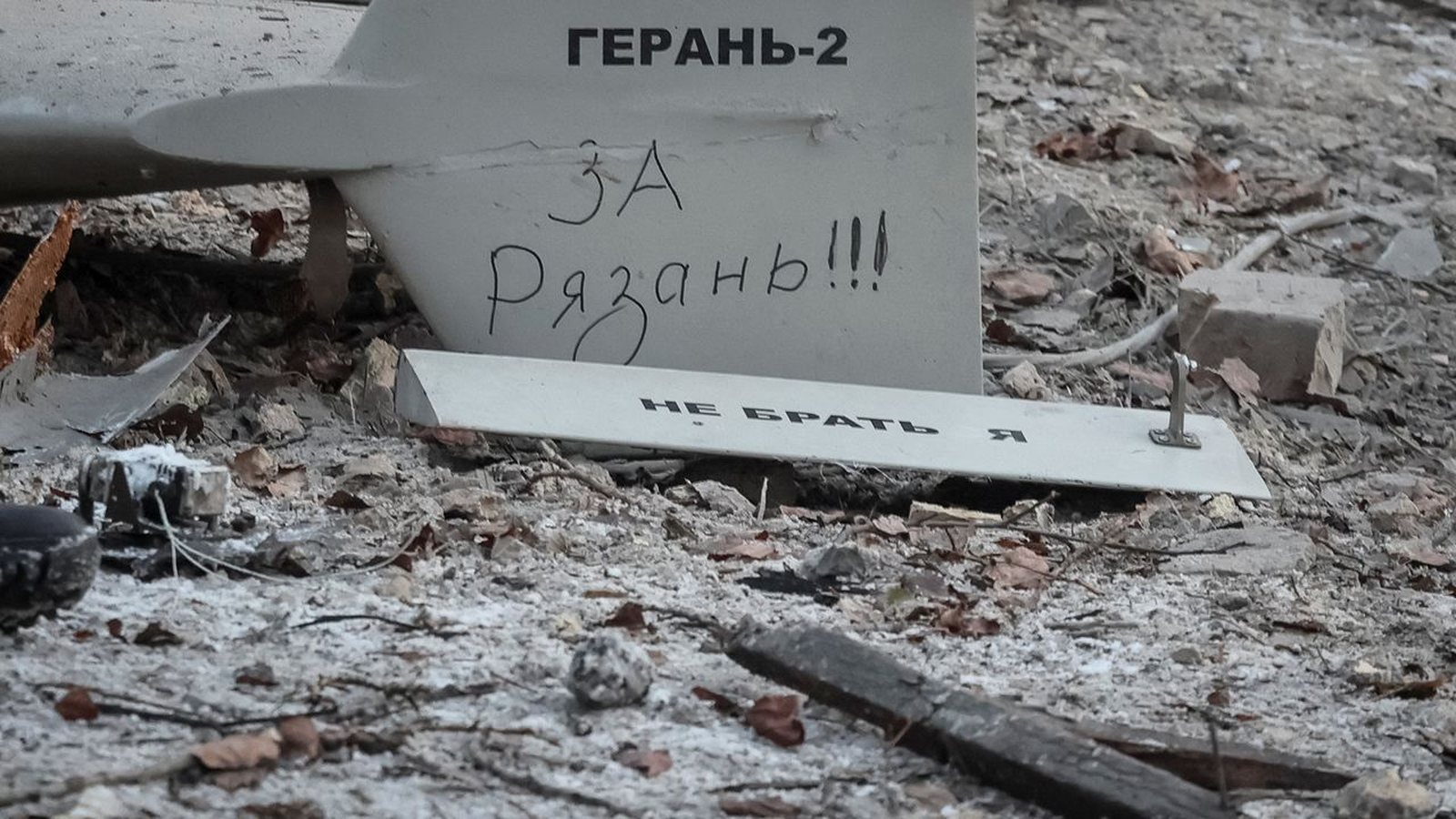
Poltava region, Ukraine, 2026. According to the account published by Militarnyi, Ukrainian soldiers recover from the debris of a Russian Geran-4 strike drone an aluminium case 17.5 cm tall. The top is damaged. Inside, a stack of circuit boards, mostly intact.
An engineer from the 1230th “Athena” Engineering and Technical Regiment (call sign “Prop”) logs the part numbers one by one. The results are published on 15 October by the Ukrainian outlet Militarnyi: 105 components identified, at least 80 of them from US companies, according to this log.
One caveat up front: this is a single controller examined, by a unit of the Ukrainian armed forces, in other words a Ukrainian source, a party to the conflict. The analysis has not been independently reviewed.
Three-quarters American, nothing Russian
According to the published table, Texas Instruments (TI) and its subsidiary National Semiconductor account for 61 components, or 58%, on their own. Next come China (11), Germany (2), and Japan, Taiwan and the Netherlands (1 each). Nine remain unidentified. No Russian electronics were identified.
The brain of the system, according to the analysis: a TI TMS320F28335 microcontroller, found on seven boards. A common industrial chip that TI markets for uses such as electric motors and solar inverters, and still in its catalogue (status “Active” on its website). Ukraine's military intelligence (GUR) also lists it in its public fact sheets on the Geran-4.
« Any shipments of TI chips into Russia are illicit and unauthorized. »
Boards dated 2026, according to their markings
According to the researcher, the boards' serial numbers carry the prefix “AL”, the usual designation for Alabuga, the special economic zone in Tatarstan. Also according to his log, two boards are dated 23 June and 12 August 2026, and the Amphenol connectors carry codes he reads as January and February 2026.
These are the dates of the boards and connectors, read from markings photographed by the unit, and they cannot be independently verified. No manufacturing date is published for the TI chips themselves. So there is no way to tell whether they were made or sold before or after 2022.
On several processors, the markings had been erased, imperfectly, according to the analysis and its photos. The researcher believes this was meant to make their origin harder to identify. That is his hypothesis, not an established fact.
Alabuga, already blacklisted
The Bureau of Industry and Security (BIS), the US export control agency, added the Alabuga special economic zone company to its Entity List on 27 August 2024, after other companies in the zone in December 2023. The result: a licence is required to supply them with any item subject to US regulations, with a policy of denial. These listings still appear in the version in force of the regulatory text, consulted on the eCFR on 19 October 2026.
Integrated processors and controllers, the category the TMS320 belongs to, sit in Tier 1, the highest-priority level, of the priority items list drawn up by Washington with the European Union, Japan and the United Kingdom against Russia. The European Union, for its part, requires its companies to withdraw from the Alabuga zone.
€1.4 million a month? A shaky calculation
Militarnyi extrapolates. At 3,000 Geran-4/5s a month, a figure attributed to Ukrainian intelligence with no published supporting document, 183,000 TI and National Semiconductor components would be needed every month. The outlet infers that TI's monthly revenue could reach about €1.4 million.
The article itself acknowledges that the calculation relies on distributors' retail prices, and that actual prices and the intermediaries' share are unknown. TI says it no longer sells anything to Russia: nothing in this calculation shows that the money goes to TI.
Counter-reading
What the official narrative doesn't tell you
Two narratives collide. Washington and TI: the controls exist, shipments are “illicit”. Militarnyi: a sign that controls are failing. The documents say less, or something else.
- The US narrative does not say which way the chips travel: BIS says that since 2022 it has restricted Russia's access to the technologies “that it needs”. According to the Ukrainian analysis, the teardown shows boards assembled in 2026, judging by their markings, with electronics that are three-quarters American.
- TI explained it to the Senate: in September 2024, its vice president and assistant general counsel said its chips typically do not require an export licence, and that hundreds of thousands, if not millions, of chips shipped before the invasion are likely sitting in storerooms around the globe.
- The Ukrainian narrative generalises: from one controller, Militarnyi concludes there is no “effective mechanism” for monitoring compliance, at company and government level alike. In our view, that is an opinion, not a demonstration.
- The headline figure is undocumented: the 3,000 drones a month are attributed to Ukrainian intelligence, with no published document.
We analyse documents and public statements, not people.
- In what year were the recovered TI chips manufactured?
- Through which third countries and resellers did they pass?
- Will the sample be handed to independent experts?
One drone, 105 components and, to our knowledge, no publicly documented resale chain. The question is not only who makes these chips, but who resells them.
Fact-check
The fact-check, point by point
Each claim in the analysis published by Militarnyi, and each official position, checked against the available documents: Ukrainian intelligence fact sheets, the Federal Register, EU texts, Texas Instruments statements. Click on a point to read the analysis.
What the official version says
On 15 October 2026, the Ukrainian outlet Militarnyi published an analysis of a Geran-4 drone flight controller recovered in the Poltava region, carried out by an engineer from the 1230th “Athena” Engineering and Technical Regiment of the Armed Forces of Ukraine. According to this analysis, of 105 components identified, at least 80 (76.19%) come from US companies, including 61 (58.1%) from Texas Instruments and National Semiconductor; no Russian electronic components were found. Also according to the analysis, the boards carry the prefix “AL” (Alabuga), and two of them are dated June and August 2026.
The article concludes that there is no effective mechanism for monitoring sanctions compliance, and estimates at about €1.4 million a month the revenue TI could derive from these controllers, based on retail prices. ZMINA reported these findings on 18 October.
Claims checked
Needs context “More than three-quarters of the Geran-4's onboard computer consists of electronic components manufactured by American companies” (Militarnyi, 15/10/2026)
The published table is detailed and consistent: 80 US components out of 105, or 76.19% by our calculation; China 11, Germany 2, Japan, Taiwan and the Netherlands 1 each, 9 unidentified. The method assigns each component to the country where its parent company is headquartered (Intersil under Japan's Renesas, Zetex under the US firm Diodes Incorporated).
But the analysis covers a single controller, examined by a Ukrainian military unit, a party to the conflict, and has not been independently reviewed. Ukrainian intelligence's public fact sheets confirm the presence of TI parts on the Geran-4, without making it possible to check the count.[1][2][3][4]
Partly verified Texas Instruments and National Semiconductor account for 61 components, or 58.1% (Militarnyi)
The percentage is correct by calculation (61/105). The fact sheets on GUR's War&Sanctions portal list, for the Geran-4 controller, a TMS320 processor (sheet published on 25/05/2026), a VP230 CAN transceiver marked TI, and an LM234 current source from National Semiconductor (sheet “Geran-4 UAV (October 2026)”, published on 05/10/2026).
The exact count of 61 components cannot be verified without access to the sample.[1][3][4]
Needs context The boards were made in Alabuga, dated 23 June and 12 August 2026; Amphenol connectors dated January and February 2026 (Militarnyi)
These points rest on readings of markings (“AL” prefix, dates, codes 260106 and 260206) photographed and interpreted by the Ukrainian unit. They cannot be independently verified.
Above all, these dates relate to the boards and connectors, not to the TI chips: the article publishes no manufacturing date for the TI components. Nothing therefore supports the claim that these chips were produced or sold after the 2022 restrictions.[1]
Needs context The markings on the TMS320 processors were erased to conceal their origin (Militarnyi)
The observation (partly erased markings) is documented by the published photos. The purpose (making the origin harder to identify amid sanctions) is presented by the article as the researcher's assessment: a plausible hypothesis, not a demonstrated fact.[1]
Misleading “Texas Instruments' monthly revenue from components for flight controllers of this type alone could reach approximately €1.4 million” (Militarnyi)
Misleading if repeated as is. The calculation extrapolates a single controller to 3,000 drones a month and applies distributors' retail prices. The article acknowledges that actual purchase prices and the intermediaries' share are unknown.
TI says it stopped selling to Russia in February 2022: proceeds from any resale by third parties go to those intermediaries, and nothing in this calculation shows that any share reaches the manufacturer. ZMINA's report, incidentally, speaks of the components' “value”, not of TI's revenue.[1][2][11]
Unsubstantiated Russia produces about 3,000 Geran-4/5s a month (Ukrainian military intelligence, cited by Militarnyi)
The figure is attributed to Ukrainian military intelligence, with no published source document. We cite it with attribution, without endorsing it.[1]
Unsubstantiated “This indicates a lack of an effective mechanism for monitoring compliance with sanctions, both at the level of the companies themselves and at the government level” (Militarnyi's conclusion)
This is Militarnyi's opinion. In our view, a single controller cannot, on its own, be used to assess control systems, let alone those of any particular company: the article documents neither the purchasing channels nor the sale dates of the chips.[1]
Verified Entities in the Alabuga zone are on the BIS Entity List
BIS added Dolphin Alabuga LLC and OOO Alabuga-Volokno on 7 December 2023 (88 FR 85095), then JSC SEZ PPT Alabuga (the special economic zone company), OOO Alabuga Development, LLC Alabuga Machinery and LLC Alabuga Exim on 27 August 2024 (89 FR 68544), citing Russia's drone programme and the Alabuga zone. These listings appear in Supplement No. 4 to Part 744 of the EAR, in the version in force consulted on the eCFR on 19 October 2026.
On the EU side, the Alabuga special economic zone is listed in Part A of Annex LII to Regulation (EU) No 833/2014: EU operators must withdraw from it, according to the Commission's FAQ updated on 19 December 2025.[5][6][7][10]
Accurate Texas Instruments publicly states that it stopped selling to Russia and Belarus in February 2022
The statement appears on TI's website (undated page) and was repeated before the US Senate Permanent Subcommittee on Investigations on 10 September 2024 by TI's vice president and assistant general counsel, who specified that this happened “before it was required to do so”.
We cannot independently verify how this halt has been applied. A civil action filed in December 2025 by Ukrainians injured in Russian strikes, or by relatives of victims, against TI, AMD, Intel and the distributor Mouser was dismissed on 1 July 2026 by a federal judge in Texas, who found that causation had not been plausibly pleaded, while granting the plaintiffs leave to amend. According to the case docket consulted on 19 October 2026, amended complaints have since been filed and are the subject of a new motion to dismiss, still pending to our knowledge. No ruling has so far found TI or the other defendants liable.[11][12][13][14]
Sourced counter-arguments
According to TI, its compliance programme has several layers: more than 4 million orders screened a year on average, thousands cancelled every year, about 75% of its revenue from direct sales in 2023, and six of its eight authorised distributors based in the United States.[11][12]
These chips are general-purpose components: TI says it sells tens of billions of them a year. According to the company, they typically do not require an export licence, chips made 10 to 15 years ago or more still work, and US officials have described chips being stripped from civilian equipment: all reasons why, according to TI, they are very hard to trace.[12]
A single sample says nothing about overall production; and date markings, if published, would reflect manufacture, not necessarily the date of purchase.[1]
This is a Ukrainian source, a party to the conflict, which may have an interest in seeing Washington tighten its controls. Its findings remain consistent with Ukrainian intelligence's public fact sheets and are backed by photos.[1][3][4]
In the civil action against TI and other companies, the judge, when examining whether a duty of care existed, noted that the complaints did not make it possible to tell when the components at issue were placed on the market.[13]
Questions that remain open
- Were the recovered TI chips manufactured before or after February 2022?
- Through which third countries and resellers did they pass?
- Is an independent examination of the sample planned?
- Do BIS and EU controls reach resellers of commonly used components?
In short
In our reading, the analysis's figures are consistent and detailed, but they cover a single controller, examined by a party to the conflict. The extrapolations (€1.4 million a month, 3,000 drones a month) and the conclusion that controls are ineffective are not demonstrated. What is documented: the presence of TI-branded components on the Geran-4, according to GUR's public fact sheets, the listing of the Alabuga entities on the US blacklist, and TI's public position. What is missing: the chips' manufacturing dates and the resale chain.
Sources
- Geran-4's On-Board Computer: Contains Over 75% U.S.-Made Components — Dmytro Shumlianskyi, 15/10/2026 — Militarnyi · accessed 19 October 2026
- US firms account for over 75% of parts in examined Geran-4 controller, 18/10/2026 — ZMINA · accessed 19 October 2026
- “Geran-4 UAV” fact sheet: TMS320 digital signal processor (published 25/05/2026) — Ukrainian military intelligence (GUR), War&Sanctions portal · accessed 19 October 2026
- “Geran-4 UAV (October 2026)” fact sheet: LM234 current source (published 05/10/2026) — Ukrainian military intelligence (GUR), War&Sanctions portal · accessed 19 October 2026
- Revisions to the Entity List, 27/08/2024 (89 FR 68544) — Federal Register / Bureau of Industry and Security · accessed 19 October 2026
- Addition of Entities to the Entity List, 07/12/2023 (88 FR 85095) — Federal Register / Bureau of Industry and Security · accessed 19 October 2026
- 15 CFR Part 744, Supplement No. 4 — Entity List (version in force) — eCFR / National Archives · accessed 19 October 2026
- TMS320F28335 — product page (status “Active”) — Texas Instruments · accessed 19 October 2026
- Common High Priority Items List (CHPL), 23/02/2024 — Bureau of Industry and Security · accessed 19 October 2026
- Special economic zones — Frequently asked questions (Article 5ah of Regulation 833/2014), as of 19/12/2025 — European Commission · accessed 19 October 2026
- TI issued the following statement on Russia (undated page) — Texas Instruments · accessed 19 October 2026
- Statement of Shannon Thompson, Vice President and Assistant General Counsel, Texas Instruments, before the Permanent Subcommittee on Investigations, 10/09/2024 — United States Senate (HSGAC) · accessed 19 October 2026
- Shumylo et al. v. Texas Instruments Inc. et al., No. 3:25-CV-3400-D, Memorandum Opinion and Order, 01/07/2026 — U.S. District Court, Northern District of Texas (via Justia) · accessed 19 October 2026
- Shumylo et al v. Texas Instruments Incorporated et al (3:25-cv-03400) — case docket (motion to dismiss the amended complaints, doc. 99; reply of 14/10/2026) — PacerMonitor (PACER data) · accessed 19 October 2026
AI-assisted content: this article was written with the help of artificial intelligence from public sources, then reviewed and approved by a human editor before publication. Spotted an error, want to respond? Exercise your right of reply · our method.